In my role with ASU Engineering, I serve as the primary developer responsible for a WordPress ecosystem supporting more than 400 sites and hundreds of users. My work focuses on developing custom themes and plugins, content modeling and backend integrations. I have led several complex content migrations, designed block-based architectures, and made deliberate decisions around hosting, deployment, and long-term web strategy.
Product Development
Pitchfork – WordPress theme and block plugin for ASU
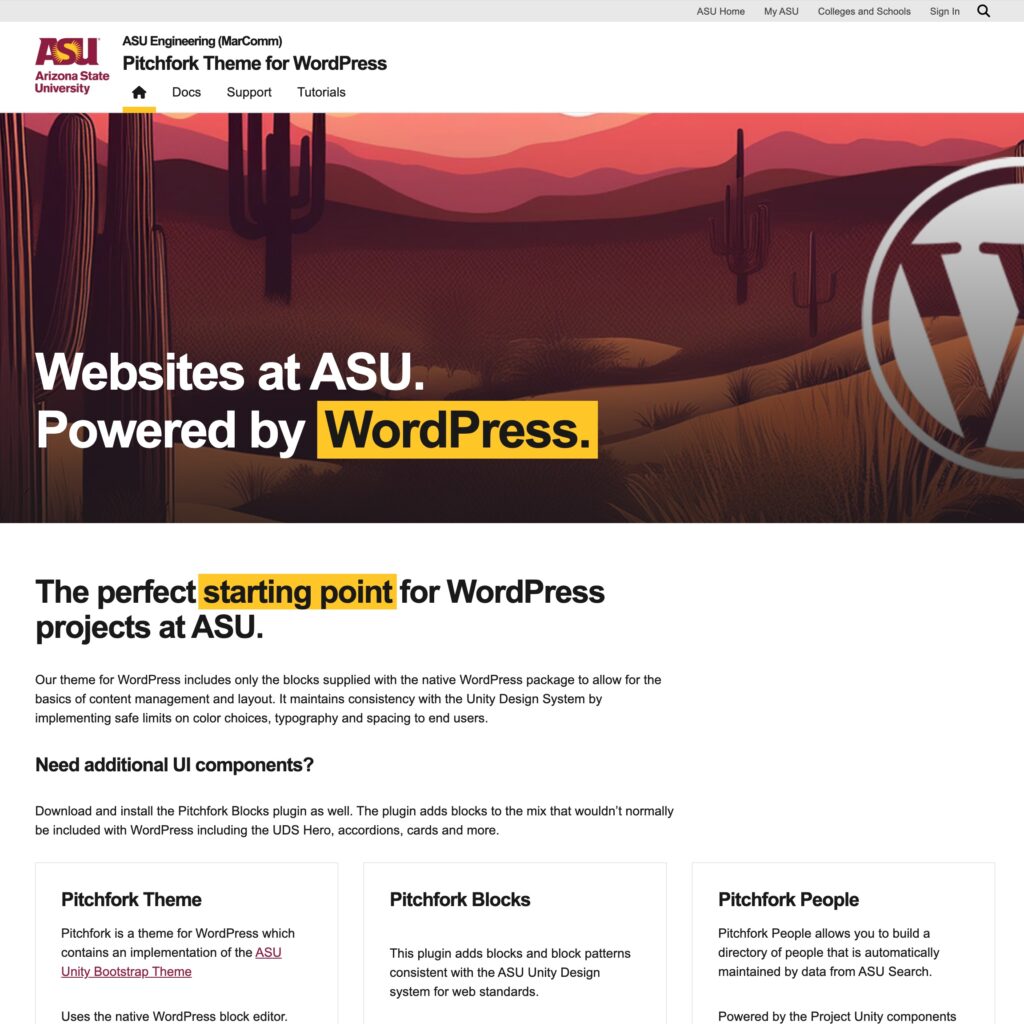
Pitchfork represents the canonical starting point for all WordPress projects within ASU Engineering. Empowers hundreds of content editors to build on-brand sites without needing custom code. Provided as open source software to various other departments within ASU.
Pitchfork Blocks is our accompanying blocks plugin which expresses more complex elements from our design kit as independent blocks for the block editor. Leverages best practices associated with Advanced Custom Fields for rapid block development and a dead-simple user interface for content editing.
Project home page: https://comm.engineering.asu.edu/pitchfork
Documentation:
https://comm.engineering.asu.edu/pitchfork/docs/
Available block-level features can be seen within our WCAG testing site at https://prod-pfwcag.fsewp.asu.edu/
Contributions and responsibilities
- Integrated ASU’s Unity Design System (UDS) tokens and components with native WordPress blocks to ensure an on-brand experience right out of the box.
- Developed walker classes and other custom functions to integrate the native WordPress menu and customizer systems with UDS React components allowing for a nearly seamless update process from upstream components.
- Developed block patterns and full page templates that work seamlessly with the native block editor.
- Oversaw ongoing releases and updates including UX optimizations and accessibility fixes and the incorporation of brand design changes.
- Documented available features through internal docs and tutorials for site builders.
Plugins
Pitchfork People – Profile and Directory blocks
- A custom plugin for Pitchfork that provides blocks for building people directories and profile pages within the block editor.
- Designed to automatically pull and display structured profile data from ASU Search APIs, keeping directory content current without manual editing.
Contributions and responsibilities
- Lead developer for the project. Coordinated with additional departments to gather functionality requirements and block improvements.
- Collaborated with data partners to shape API integration and caching strategies that respect service limitations and reduce load times.
- Implemented cache management dashboard options screen enabling site admins to control how long profile data is stored and ensure freshness.
Additional plugins and projects
- ASU Icon Block
Built as an extension of an existing plugin called The Icon Block, our WordPress plugin integrates additional icons directly into the block editor, enabling editors to insert brand-approved SVG icons while maintaining accessibility and performance. - Description List Blocks
Created an open-source WordPress block plugin that adds native support for semantic<dl>,<dt>, and<dd>markup in the block editor. Fills a gap in core offerings from WordPress while aligning with ASU’s design system and accessibility standards.
Showcase
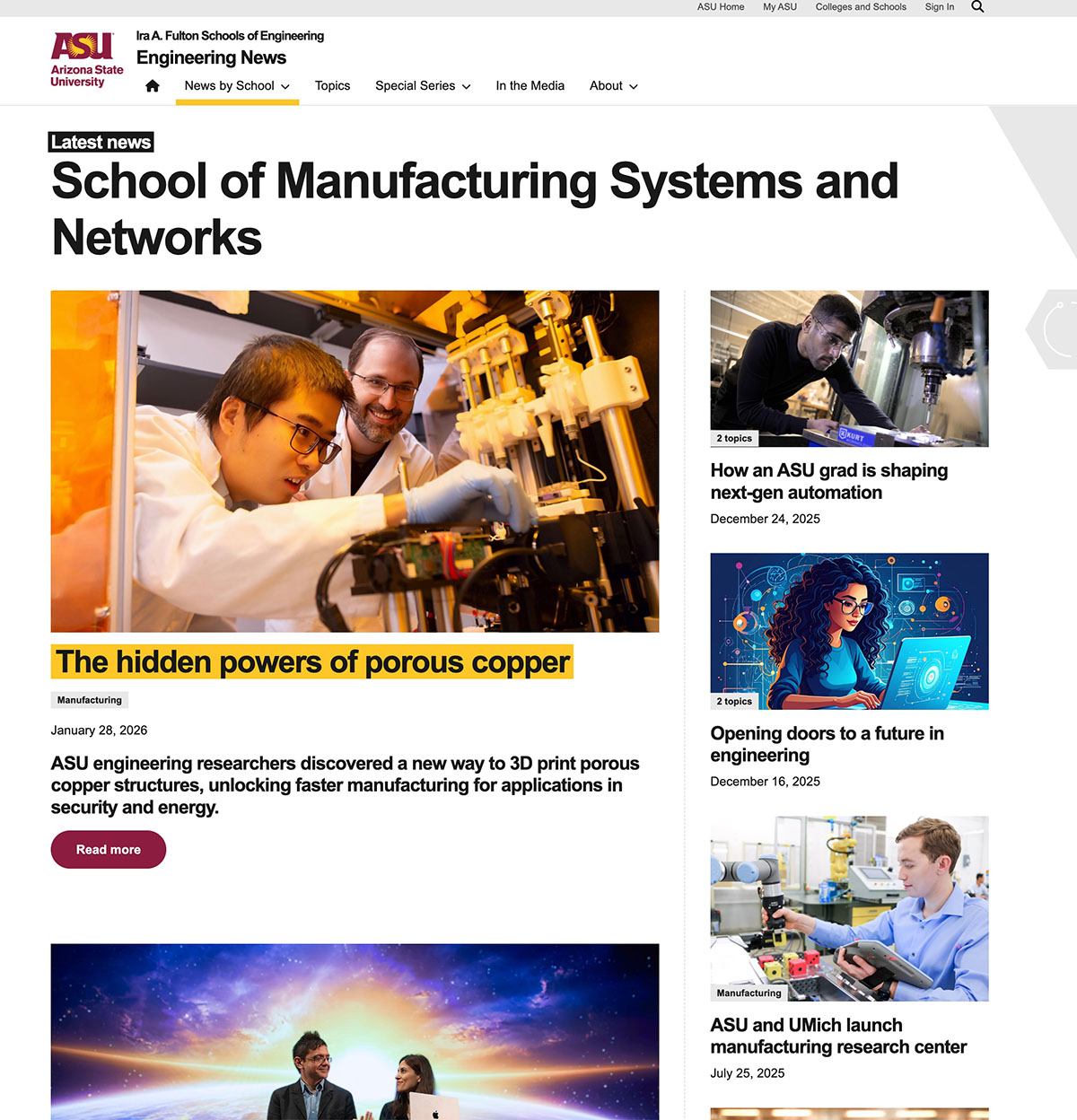
news.engineering.asu.edu
A scalable news architecture to support long-form storytelling and recurring series within our department.
Implemented reusable block patterns for feature stories, special series, and high visibility landing pages.
Highly detailed taxonomy term pages express not only content collections, but how those collections relate to other terms within the site.
Migrated over 2000 pieces of content from previous site including scripted system to translate extraneous page builder markup into proper block scaffolding.
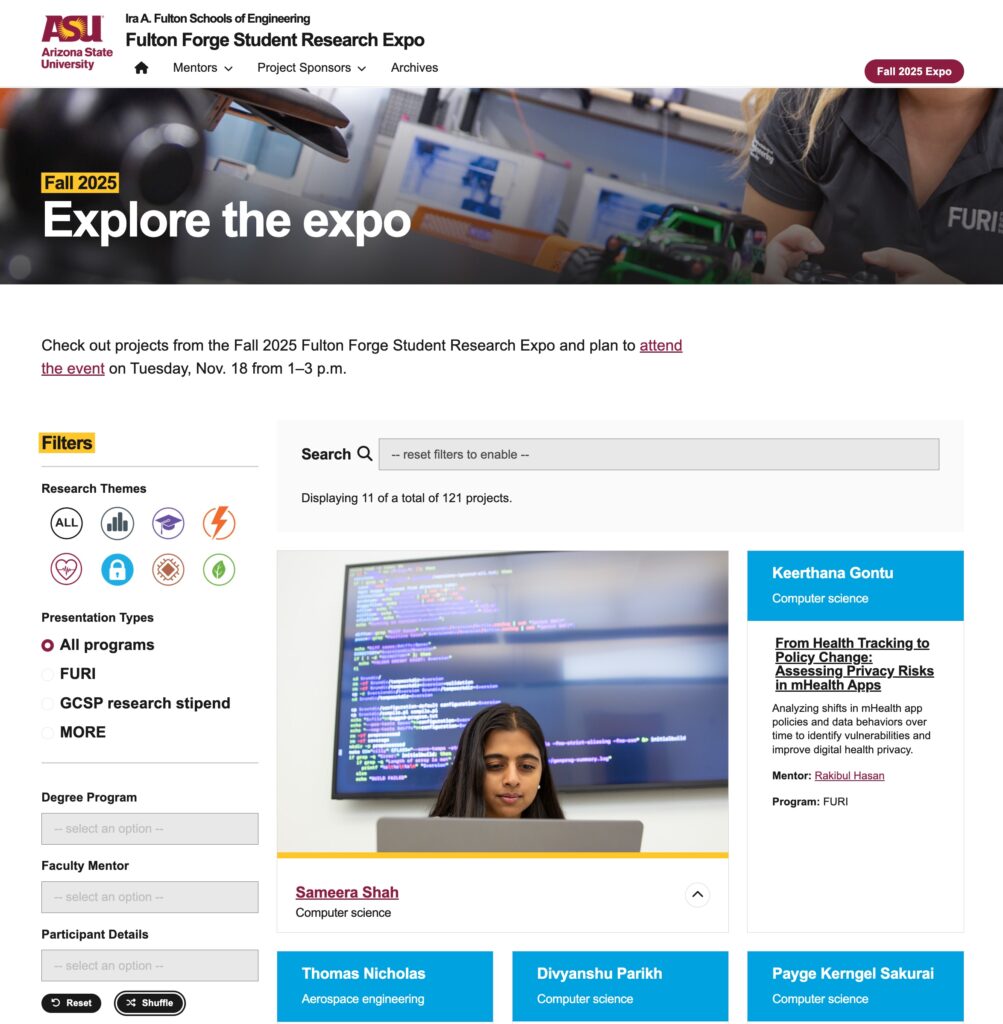
forge.engineering.asu.edu
Developed a specialized content model to capture and archive student-led research highlights while showcasing outstanding faculty contributions.
Designed a taxonomy-driven workflow that enables the site to “roll over” to each new semester of Expo projects without complex staging or manual restructuring.
Supports the largest publicly available repository of student work at the university, featuring more than 1,700 projects across 23 Expo events.
Built a resilient, flexible system that allowed the site to rapidly pivot to a fully online Expo experience during COVID-19.